AI generated translation
30.04.2026
Hercesa reinforces its commitment to sustainable building at the conference on the new version of the Technical Code
Hercesa's Sustainability team attended the conference organised by GBCE and Saint-Gobain on the new version of the Technical Building Code, a technical meeting that analysed the regulatory changes that will mark the future of sustainable construction.
30/04/2026
Hercesa, present at a key meeting for the future of the sector
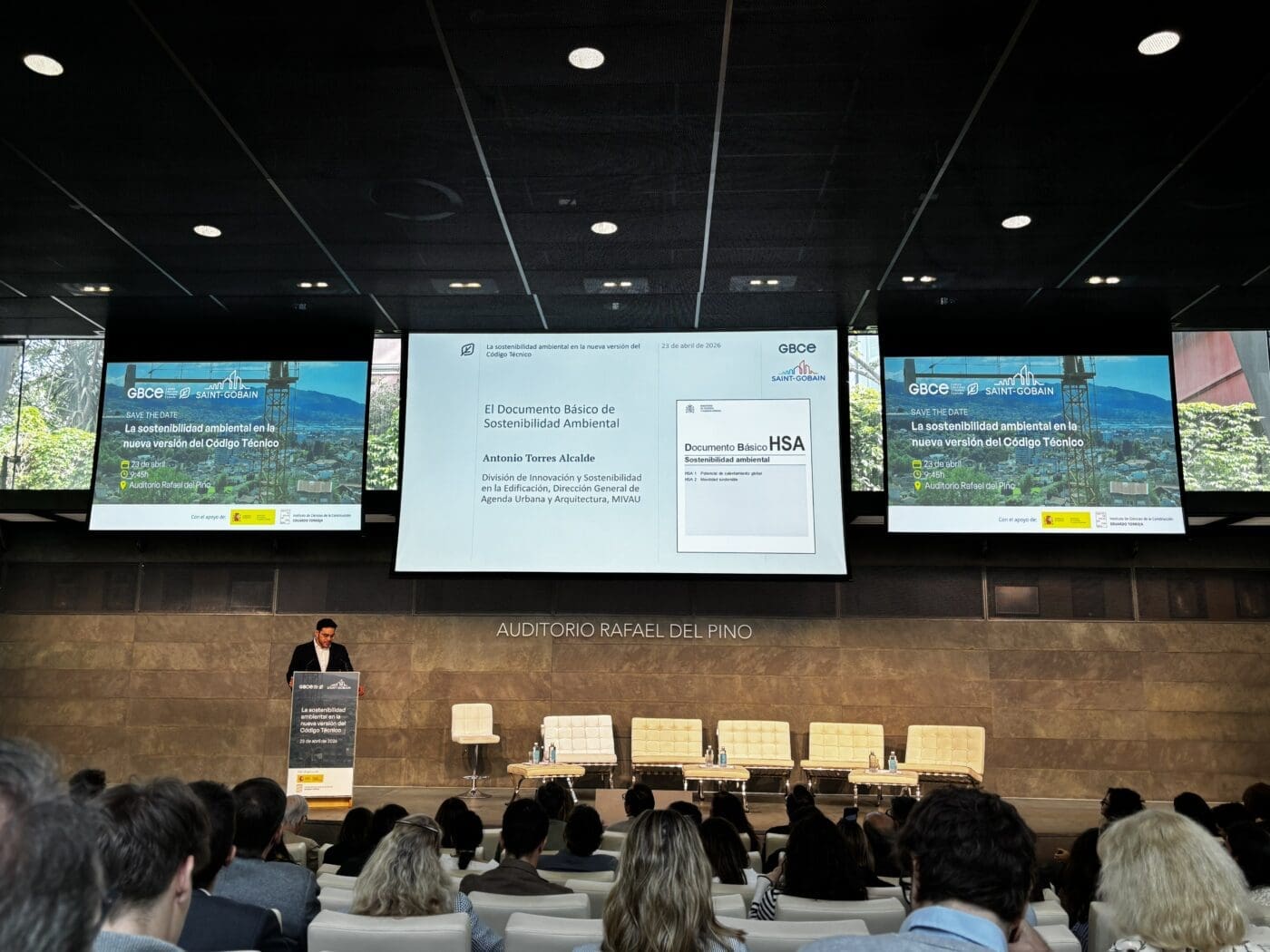
Hercesa has participated in the conference “Environmental sustainability in the new version of the Technical Building Code”, organised by Green Building Council España (GBCE) and Saint-Gobain, a reference event to analyse the scope of the new regulatory requirements on sustainability applied to building.
The company was represented by Hercesa’s Sustainability team, made up of Estefany Tavares Ferreira and Noel Gracia Indias, in a session that provided an insight into the changes that are already redefining the way of designing, building and developing projects in the real estate sector.
The new Technical Code puts sustainability at the core
One of the main focuses of the conference was the new version of the Technical Building Code, which incorporates for the first time the Basic Environmental Sustainability Document (CTE-HSA) as a key element within the regulatory framework. This new approach reinforces sustainability as a structural axis of building and not only as a strategic line of improvement.
During the meeting it was made clear that this regulatory change will have a direct impact on all the agents involved in the construction process, from developers and construction companies to manufacturers, planners and technical teams.
Life cycle and global warming potential analysis
Among the most relevant contents addressed during the session, the growing importance of the life cycle analysis (LCA) of buildings and the calculation of the global warming potential (GWP), two parameters that will gain weight in the environmental assessment of projects, stood out.
These metrics will allow a more accurate measurement of the environmental impact of buildings throughout their life cycle, favouring more rigorous and objective decision making in line with the sector’s decarbonisation objectives.
Sustainable mobility and energy transition
Another aspect discussed was sustainable mobility, a dimension that is also relevant in the regulatory update. In this area, the requirements related to the electrification of buildings and the adaptation of car parks to new needs linked to the energy transition are reinforced.
This approach is directly linked to the evolution of the sector towards more efficient building models, ready to respond to the environmental and energy requirements of the coming years.
Regulatory change with real project implementation
The conference had a particularly practical focus, aimed at explaining the real scope of these changes, resolving frequent doubts and debunking some of the myths that still exist around sustainability applied to building.
For Hercesa, participating in this type of meetings is essential to anticipate regulatory changes, to continue incorporating technical knowledge and to reinforce a project vision aligned with innovation, efficiency and environmental responsibility.
Shared commitment to more responsible construction
In addition to the technical content, the conference provided an opportunity to share experiences with other professionals in the sector and to note the growing commitment of the building industry to a more efficient, measurable and environmentally friendly construction model.
In a context marked by the objectives of the 2030 Agenda and by the evolution towards zero-emission buildings, this type of forum is key to continue advancing towards more sustainable construction, with increasingly demanding criteria that are better integrated into the reality of the projects.
Press material

 Phone
Phone  Contact