AI generated translation
23.02.2026
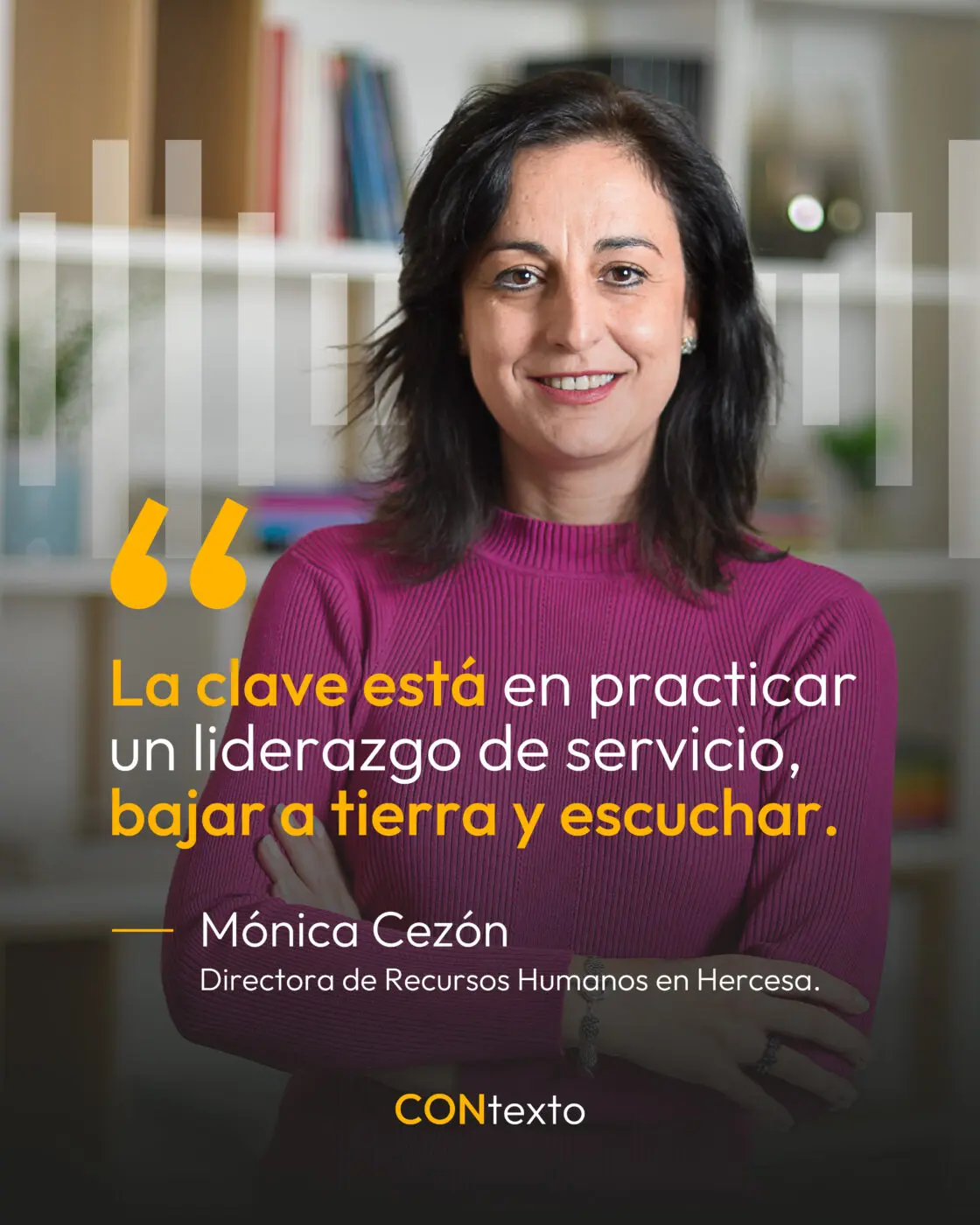
Mónica Cezón, HR Director at Hercesa “The key is to get down to earth, listen and practice servant leadership”.
In this issue of CONtext, we talk to Mónica Cezón, Human Resources Director at Hercesa, about how teams evolve in an increasingly digital and collaborative environment. A close reflection on talent, corporate culture and technology, and how all this is integrated to make stronger teams and meaningful projects.
23 February 2026
Welcome to CONtext, a space for conversation where we explore what goes on behind each project: the people, processes and decisions that move our day-to-day work forward. Here we give voice to those who combine talent, method and innovation to work in a more collaborative, humane, efficient way to make meaningful homes.
In this edition, we talk to Mónica Cezón, Director of Human Resources, about how teams work, collaborate and evolve in an increasingly digital environment. A close look at the people, processes and technology that underpin each project.
Monica, in a company where very different profiles coexist: office positions with technicians and technicians of all kinds, on-site positions, sales, customer service, etc. What would you say are the keys to successful talent management?
The key is to get down to earth and listen, and to practice servant leadership. It is about understanding how each team works, what their needs are, what their language is, their timing, their objectives and what exactly they bring to the business. From there, the challenge is to align these realities with the company’s strategic objectives.
The sector has changed a lot. From your perspective, how has the way of working as a team evolved within Hercesa?
Digitalisation has greatly transformed the way we work, creating a shared digital environment that provides agility, real-time knowledge of situations and data and greater coordination between the professionals involved in the project. In addition, it allows you to meet without the need to be present in person. All these factors at the same time generate more autonomy.
On the other hand, more work is now done on a project basis, not so much in separate departments, with the overall objective of the company above the departmental one. Another important point is leadership, which is no longer so authoritarian and is more facilitative, structures tend to be flatter and communication improves.
You have seen entire generations of professionals pass through. What do you think defines the Hercesa culture?
I would say that we are very demanding professionals, but also very human, both things are perfectly compatible. People know each other, help each other and get involved despite the tensions that may arise at specific moments. Deep down we know that we love each other, or at least we put up with each other in a very professional way. To give you an idea of this closeness, everyone has access to the president, CEO and general management.
In this sense, we work a lot on the cohesion between the staff at events such as: conventions, leisure meetings, Christmas lunches, family activities, etc.
Let’s get down to the real truth: do you remember what you thought the first time you walked into Hercesa’s offices?
Well, I went into a very small office temporarily until I was transferred to the head office. There was a person there, my dear Paco, who did not know my job but who voluntarily helped me a lot to understand the dynamics of the company (to know with whom to deal with each subject, including a joke about the personality of the “who”, an extremely important issue in life).
My task was to create the HR department from scratch, starting with payroll and social security (which was not exactly my speciality). So I thought “this is going to be tough, but challenging and very rewarding if I succeed”. The truth is that I was let out on my own… It’s a good thing that this doesn’t happen now and that there is support in the reception process (since you wanted sincerity).
With so many years in Human Resources, I’m sure you have some anecdotes that are still remembered in the corridors…
Yes, we still laugh about something that happened to me a few months ago. I hardly ever do job interviews any more because there is a dedicated person in my team. Although new recruits are always introduced to colleagues, one day I wasn’t there when a PRL technician came in.
A few days later, I happened to have an interview and went to the lift to meet the candidate. The doors opened, a person I didn’t know appeared, I welcomed him and started the dialogue on the way to the office. I could see that he was cut off and looked at me funny, until he told me that he was the PRL guy, after all the bullshit I had given him… He almost waited for me to do the interview to tell me. The poor guy couldn’t believe it, he just had to ask me if there was a hidden camera.
I throw words at you and tell me the first thing that comes to your mind:
- Curriculum:. First impact
- Job interview: you win, I win.
- Hercesa Team: human professionalism
If one day we don’t find you in the office, where should we look for you?
In my village in empty Spain. Empty of inhabitants, yes, but full of wonders: landscapes of mountains and rivers that recreate the view; the smell of the forest after the rain and of burning firewood; the taste of a good barbecue; the sound of birds and waterfalls; the touch of the icy waters in your hands and, above all, the unrepeatable moments with childhood friends.
Thank you, Monica, for giving voice to the work that is not always seen, but which underpins so many processes and teams. Conversations like this help us to better understand how we work and what is behind each project.

 Phone
Phone  Contact